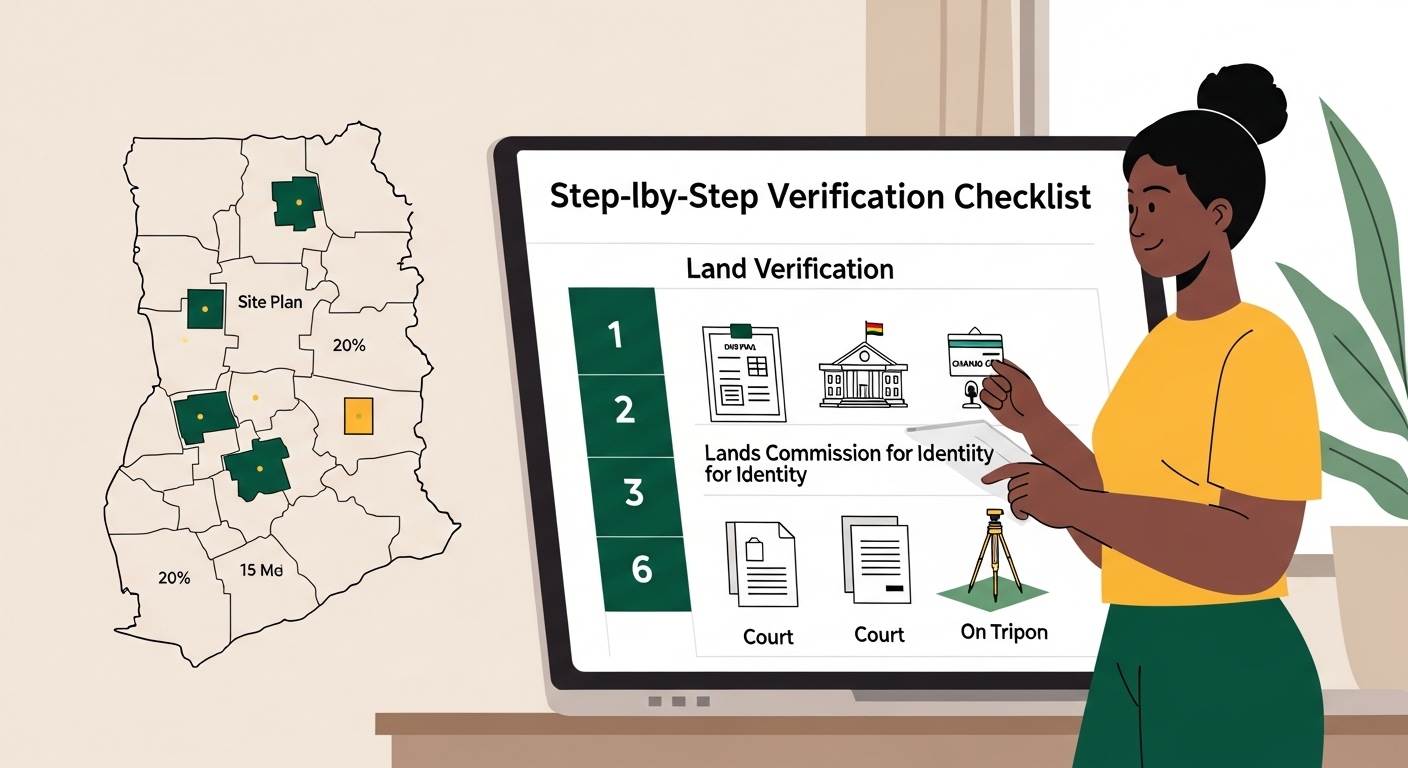
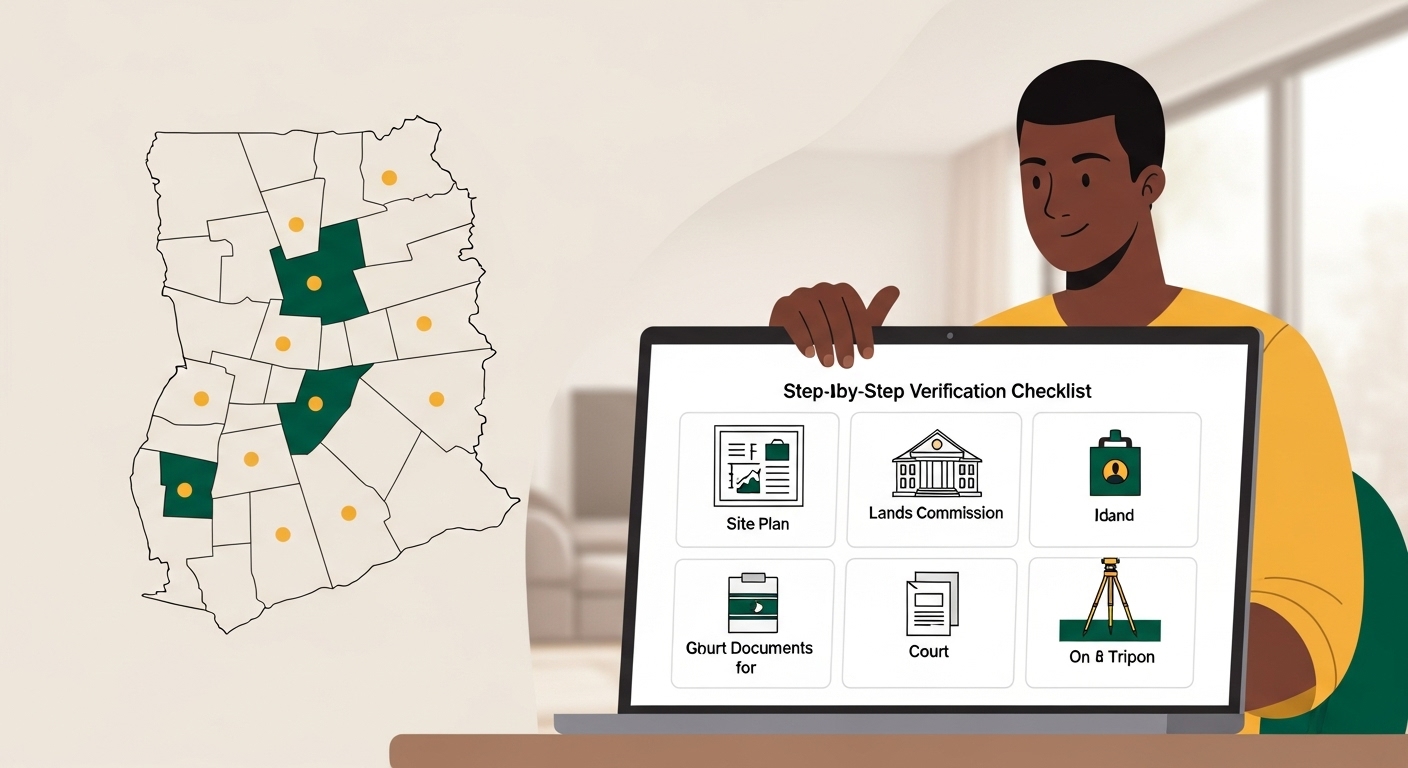

How to Verify Land in Ghana (A Step-by-Step Guide for Diaspora Buyers)
Buying land in Ghana is one of the most meaningful investments you can make — whether it’s for building your retirement home, developing property for income, or simply owning a piece of your
roots.
But as rewarding as it is, it can also be risky. Every year, many Ghanaians abroad lose thousands of dollars to fake land deals, forged documents and double sales. These scams thrive because buyers trust too easily, act too quickly, or rely on the wrong people.
The truth is, verifying land in Ghana doesn’t have to be complicated. You just need to know what
to check, who to ask, and where to look. This guide breaks it all down, step by step.
Step 1: Start With the Site Plan or Plot Number
Before you do anything, make sure the seller gives you a site plan or at least the plot number of the land.
The site plan shows the exact location, size, and shape of the land. It should be signed and stamped by a licensed surveyor and include the surveyor’s name, contact, and license number.
At GhanaLandchecker, we always ask for this first. Without a site plan, you can’t verify anything officially, it’s like trying to find a house without an address.
Step 2: Do a Search at the Lands Commission
The Lands Commission is where you confirm whether the land is truly registered, who owns it, and whether there are any issues attached to it.
This is called a Title Search or Official Search Report.
When you apply for the search, the report will show:
- The name of the registered owner
- The size and location of the land
- The type of interest (freehold, leasehold, or stool land)
- Any encumbrances (mortgages, caveats, or disputes)
The search usually takes between 5 to 10 business days, depending on how busy the registry is. It can be done in person or through a legal representative.
If the seller hesitates to give you details for the Lands Commission search, that’s already a red flag.
Step 3: Verify the Seller’s Identity
Many scams in Ghana start with the wrong seller. Someone poses as the owner or a “representative” and disappears after taking your money.
That’s why it’s crucial to verify who you are dealing with.
If the seller is an individual, ask for a valid Ghana Card or Passport.
If it’s a company, check its registration at the Registrar-General’s Department to confirm it exists and the right people are listed as directors.
If it’s a stool or family land, make sure the chief, head of family, or caretaker has a valid authorization letter, and that other principal members are aware of the sale.
At GhanaLandchecker, we cross-check all this information and keep evidence for every ID or document received.
Step 4: Check for Court Cases and Disputes
This step is often ignored , and it’s where most people get into trouble. Some plots of land are in ongoing court cases, and you won’t know unless you check.
You can search through the High Court, Circuit Court, or the Lands Commission Legal Department to find out if there’s any case involving the seller or the property.
Our background verification process includes checking court registries and litigation databases to confirm whether the land is clean or has pending disputes.
If you skip this part, you might buy land that’s already tied up in years of legal battles.
Step 5: Conduct a Physical Site Visit
Never buy land without seeing it in person , or having a trusted professional inspect it.
A survey and site inspection helps you confirm three things:
- That the land actually exists where the seller says it does.
- That there are no other people developing or claiming the land.
- That the boundaries on the ground match what’s on the site plan.
At GhanaLandchecker, our surveyors visit the site, take GPS coordinates, photos, and verify the boundaries. It’s the best way to detect encroachments or resales early.
Step 6: Get a Written Due Diligence Report
After completing the checks, you should receive a written summary of what was found. This is called a Due Diligence Report.
It should state clearly:
- Who owns the land
- Whether it’s registered
- Any encumbrances or red flags
- The physical condition of the land
- A simple recommendation (Safe to buy, Proceed with caution, or Do not buy)
Our reports at GhanaLandchecker combine all this information in a single lawyer-backed document. It’s straightforward, evidence-based, and easy to understand.
Step 7: Consult a Lawyer Before Payment
This is where many people rush and regret later.
Before making any payment, let a lawyer review the sale agreement or lease document. The lawyer will make sure:
- The seller is legally allowed to sell
- The terms of the contract protect you
- The transfer of ownership will be registered in your name
Legal fees may seem like an extra cost, but compared to losing $10,000 or more, it’s a small price to pay for peace of mind.
The Smart Way: Let GLC Handle It All
Instead of moving from one office to another , Lands Commission, court registry, surveyor, and lawyer — GhanaLandchecker handles everything for you under one roof.
Our verification process includes:
- Lands Commission title and encumbrance check
- Seller and ID verification
- Court and litigation search
- On-site GPS and photo verification
- Final due diligence report reviewed by a lawyer
That means you get clear answers, real documents, and peace of mind before you invest.