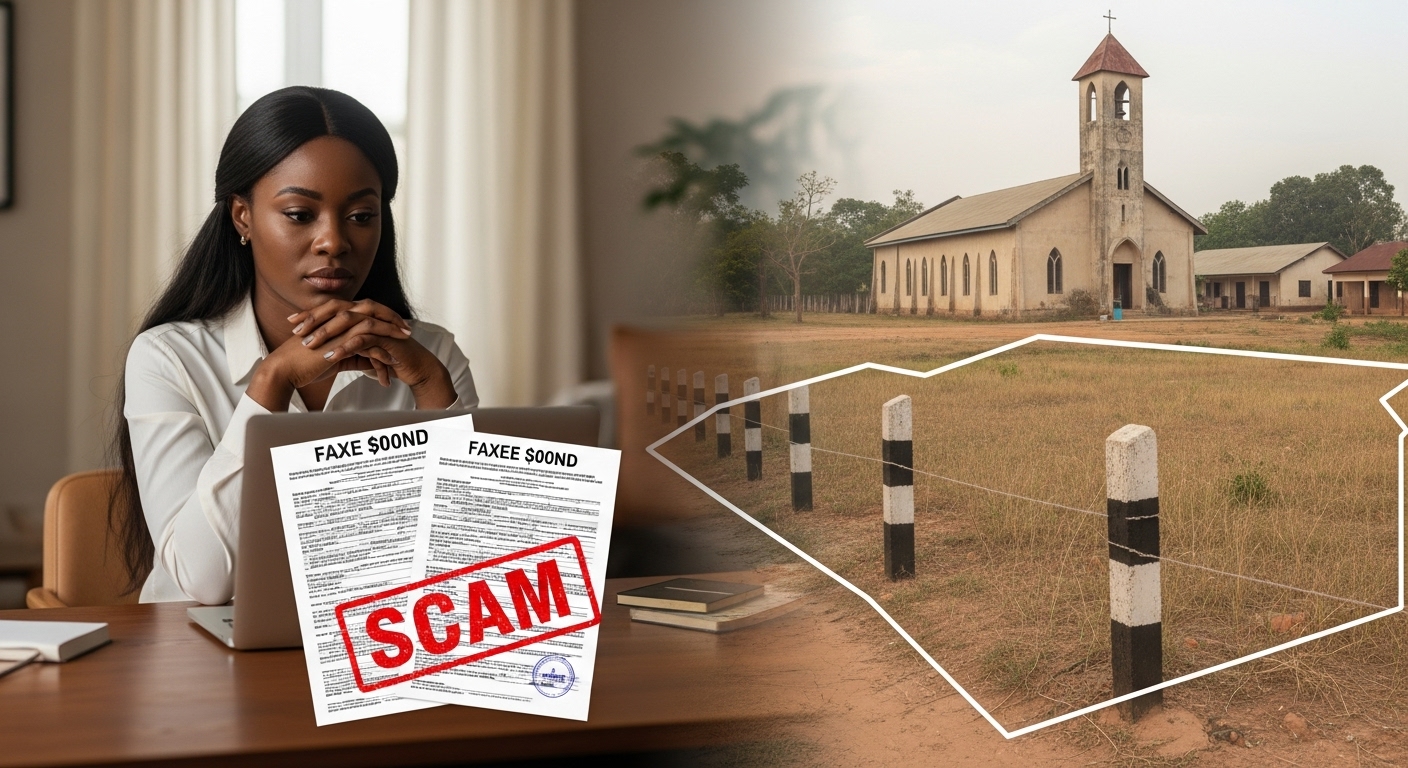

How a US-Based Ghanaian Lost $50,000 in a Fake Land Deal — and How It Could Have Been Prevented
The Promise and the Trap
For many Ghanaians living abroad, the dream of investing back home is deeply emotional.
Building a house for family, buying land for retirement, or developing a small business in Ghana are milestones of pride and connection.
But as one U.S.-based Ghanaian doctor painfully discovered, the journey to owning land in
Ghana can be filled with deceit, forged documents, and sophisticated scams. Her story — first reported by GhanaWeb in September 2024 — is both a warning and a lesson in why due diligence
matters.
The Beginning: A Trustworthy Face
In December 2021, during a visit to Ghana, the doctor was introduced to a man named Harry. He came highly recommended through social circles — well-dressed, articulate, and confident.
First, Harry convinced her to invest $20,000 into a supposed film production project. When that venture went silent, he quickly shifted the conversation to real estate. Knowing her desire to acquire land, he introduced an opportunity to buy four plots in Katapo, allegedly owned by his church.
The mention of a church gave the deal credibility. To someone living abroad, this seemed trustworthy and even noble.
The Perfect Deception
Harry presented what appeared to be authentic documents — land title certificates, receipts, and church letterheads. He even showed bank checks and proof of ownership, telling a convincing story that the church was selling the land to fund expansion.
The doctor, feeling reassured, made several transfers to cover the land purchase and the cost of building a wall around the property. She believed she was securing her dream home. In reality, she was being defrauded.
The Discovery
When the final payment cleared and construction was about to begin, she made a shocking discovery. The land had already been sold to multiple buyers. The documents were forged, and the checks were fake.
Harry had only paid a fraction of the total cost to a real realtor and pocketed the rest of the money. By the time the truth emerged, she had lost nearly $50,000.
How This Could Have Been Prevented
This case is not unique. Land fraud in Ghana often involves authentic-looking documents, partial truths, and emotional manipulation, especially targeting diaspora buyers.
A GhanaLandchecker Due Diligence Report would have uncovered the scam early and prevented this loss. Here’s how:
- Official Lands Commission Search
Would have confirmed the true ownership of the land and exposed any encumbrances or multiple
sales. - Seller and Entity Background Verification
Our ID and business registry checks would have shown that Harry had no legitimate link to any
church or real estate entity. - Litigation and Court Search
A search of the court records would have revealed any ongoing land disputes involving the
property. - Media and Reputation Scan
A simple digital scan often exposes repeat offenders and public complaints from past victims. - Risk Flagging System
The report would have returned a clear “Red — Do Not Proceed” warning, supported by
evidence.
The Lesson: Trust, But Verify
Diaspora buyers are often the prime targets of land scams because scammers know that distance makes verification difficult. Land verification is not just a legal requirement — it is financial protection.
No matter how convincing a seller seems or how official the documents appear, every buyer should ask one key question:
“Has this land been verified by GhanaLandchecker?”
The Takeaway
This $50,000 loss is a painful reminder that buying land without proper verification can be devastating. But it is also a reminder that there is a safer way forward.
At GhanaLandchecker (GLC), we combine legal due diligence, Lands Commission data, and surveyor inspections into one comprehensive, lawyer-backed report.
One verified report can save you from losing everything.
Before you buy land, verify it.